
What Makes a Fine Dining Experience Unforgettable?

The very best fine dining experience can never be just about food. The perfect hospitality experience, an atmospheric ambiance, perfectly calibrated menus, and all manner of small details in between that evoke for a guest the thought Time Well Spent. It was a night at ISU in St. Petersburg, FL, where every single second of the evening was precisely calculated, right down to an experience that outlives your last dessert being served.
Key Takeaways
Deliver Complete Hospitality: True luxury dining relies on the entire ecosystem of service, pacing, and ambiance rather than excellent food alone.
Prioritize Fluid Service: Professional, intuitive floor staff form the backbone of guest satisfaction and overall retention.
Balance Every Touchpoint: Lighting, interior design, plating techniques, and acoustic balance must work in tandem to support the menu.
Champion Culinary Innovation: Rotating seasonal ingredients and chef-driven execution ensure texturally interesting, creative plates.
Focus on Small Details: Micro-interactions and personalized preferences transform a simple dinner into a memorable tradition.
What Is a Fine Dining Experience?
An upscale fine dining is an extremely articulated meal experience that focuses on high-level food, exact hospitality, and elegant surroundings. These high-end establishments are not casual neighborhood spots; they focus on crafting a more holistic experience where every single touchpoint is purposefully crafted.
On the ground, luxury dining is about having complete culinary trust. From that exact moment you step through the entryway until you collect your coats, the main aim is to offer complete comfort, unrivalled quality, and intuitive, tender loving care. Celebrating an anniversary or just enjoying a night out in the St. Petersburg dining scene, you demand a level of service that alters your perception of meals.
What Are the Core Elements of Luxury Hospitality?
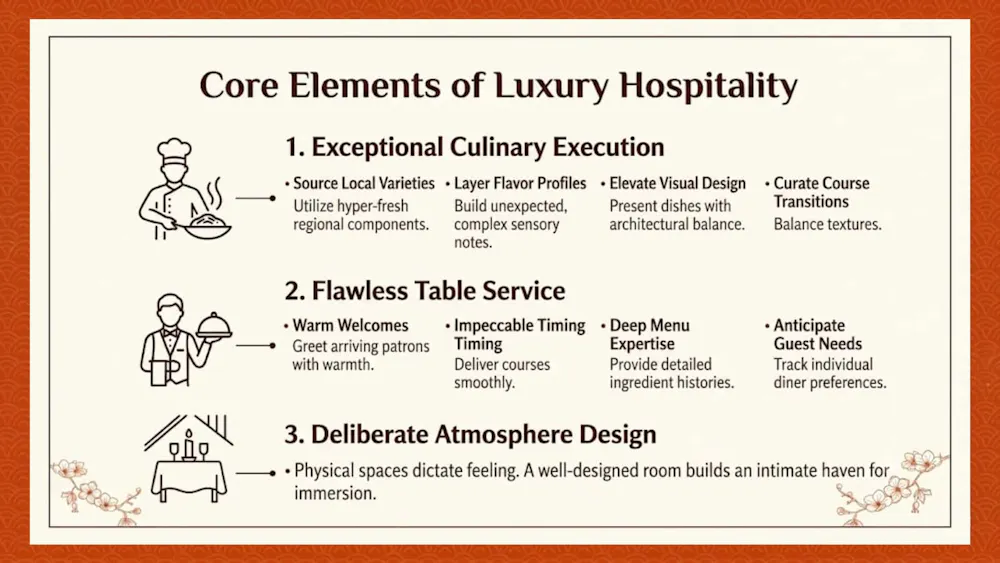
1. Exceptional Culinary Execution
At the foundation of any high-concept menu sits pristine ingredient sourcing and culinary technique. Executive chefs must select raw components at their absolute peak and manipulate them with artistic precision.
Source Local Varieties: Utilize hyper-fresh regional components to lock in natural flavors.
Layer Flavor Profiles: Build unexpected, complex sensory notes across each individual plate.
Elevate Visual Design: Present dishes with architectural balance to create anticipation.
Curate Course Transitions: Balance textures so that light appetizers naturally set up rich, substantive main courses.
2. Flawless Table Service
Floor service often dictates whether a guest returns or books elsewhere next time. Highly trained service staff understand deep menu mechanics, suggest ideal pairings, and read table dynamics perfectly without interrupting conversations.
Warm Welcomes: Greet arriving patrons with genuine, dignified warmth.
Impeccable Timing: Deliver courses smoothly without forcing guests to feel rushed or forgotten.
Deep Menu Expertise: Provide detailed ingredient histories and structural details for complex preparations.
Anticipate Guest Needs: Track individual diner preferences, from specific water choices to dietary restrictions.
3. Deliberate Atmosphere Design
Physical spaces dictate how people feel while sitting down for a multi-hour dinner. Lighting angles, acoustic levels, architectural lines, and pristine cleaning protocols establish the broader baseline for the room. A well-designed dining room builds a comfortable, intimate haven where tables can relax and immerse themselves completely in the evening.
Which Menu Configurations Drive Elite Gastronomy?
The specific architecture of a menu allows a kitchen to demonstrate its creative boundaries while giving diners distinct paths to explore.
The Strategic Framework
The À La Carte Configuration
Maximize Guest Autonomy: Allow individuals to engineer their own progression across separate courses.
Highlight Standalone Execution: Ensure every single item possesses enough structural weight to succeed on its own merits.
The Prix Fixe Selection
Curate Fixed Layouts: Present a multi-course roadmap for a uniform, predetermined price point.
Showcase Signature Work: Feature core technical dishes that define the restaurant's identity.
The Micro-Seasonal Rotation
Capture Peak Harvests: Change individual offerings throughout the calendar year to match fresh components.
Fuel Kitchen Creativity: Challenge the culinary team to innovate continuously with local agricultural yields.
How Does Modern Technology Elevate High-End Dinners?
Modern operational software streamlines kitchen and front-of-house logistics without eroding the warm human touch that defines luxury.
Contextual Operations
Digital Reservation Access: Cloud-based platforms let patrons secure tables instantly while helping managers optimize seat maps.
Engaging Web Presence: Clean digital portals let guests preview active menus, explore private events, and establish expectations early.
Informed Guest Insights: Tracking past preferences helps teams note favorite tables, allergy profiles, and critical milestones.
 How Do Elite and Casual Establishments Differ?
To understand why a dedicated fine dining experience requires so much meticulous planning, it helps to look at how it compares to standard casual operations.
Operational Focus | Fine Dining Establishments | Casual Dining Spots |
Room Ambiance | Formally designed, quiet, and intimate | Relaxed, high-energy, and loud |
Service Standards | Personalized, anticipatory, and deeply trained | Efficient, functional, and transactional |
Ingredient Sourcing | Premium, rare, and strictly fresh | Standardized, high-volume, and familiar |
Menu Architecture | Multi-course tastings and custom pairings | Single-plate entrees and simple layouts |
Plating Techniques | Artistic, precise, and visual | Utilitarian, fast, and heavy-portioned |
Why Do Patrons Return to Top-Tier Establishments?
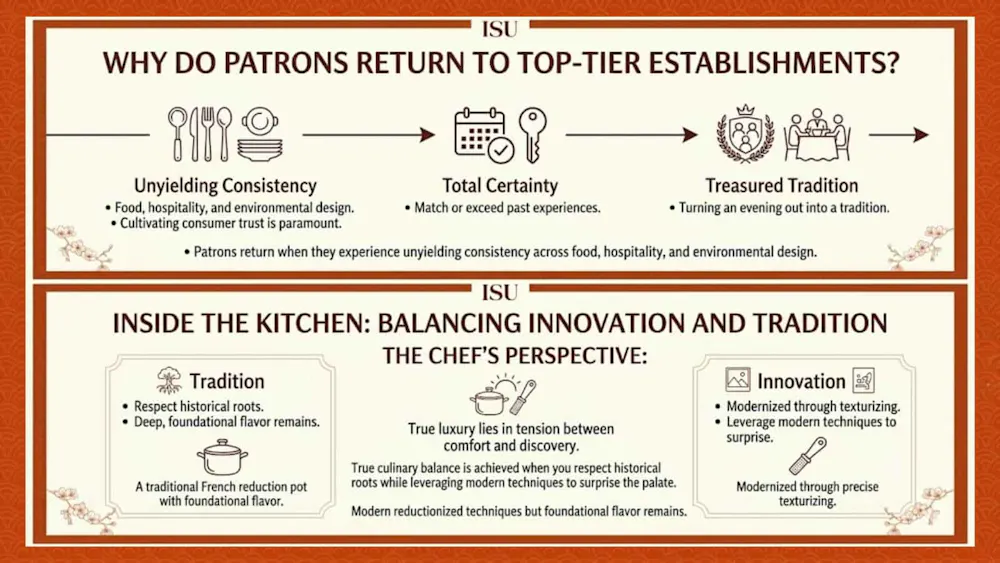
Diners return to an elite restaurant when they experience unyielding consistency across food, hospitality, and environmental design. Cultivating consumer trust is paramount. Guests want total certainty that every single reservation will match or exceed their past experiences. Establishments that relentlessly police their execution build lifelong relationships, turning an evening out into a treasured tradition.
Inside the Kitchen: Balancing Innovation and Tradition
The Chef's Perspective: True culinary balance is achieved when you respect the historical roots of a dish while leveraging modern techniques to surprise the palate. For example, a traditional French reduction can be modernized through precise texturizing, but the deep, foundational flavor must remain uncompromised. True luxury lies in that tension between comfort and discovery.
Experience Elite Gastronomy at ISU in St. Petersburg, FL
At ISU, we provide a beautifully orchestrated fine dining experience that fuses creative japanese cuisine with intentional hospitality and an enchanting physical room. Located right in the heart of St. Petersburg, FL, our team is wholly committed to driving quality through every single phase of your evening, from your initial booking to the final house-made confection.
Whether you are gathering to toast an important life change or simply looking to slow down and enjoy a premium dinner, our staff brings the precise care that turns a simple evening out into something extraordinary.
To secure your table or discuss custom dietary arrangements for your party, connect directly with our front desk by calling (727) 866-4633.
Putting Your Dining Plans into Motion
A magical night is forged in the blend of superior cooking, seamless service, thoughtful design, and sincere hospitality. World-class food brings them through the front doors, but its the lionhearted application of a holistic experience that creates lasting memories. For piners throughout the St. Petersburg area, its ISU still provides the gold standard of consistency, culinary artistry and heartfelt hospitality.
Frequently Asked Questions
Q: What makes upscale dining different from standard casual operations?
A: While elite dining zeros in on custom service, scarce premium ingredients, serene settings, and highly stylized multi-course meals, casual dining emphasizes rapid execution of standard-size portions in informal spaces.
Q: Is fine dining room table reservations compulsory?
A: Many places have a trickle of walk-in space at the bar, but we still recommend advance reservations on weekends, holidays or major events to ensure you have a seat!
Q: What is the dress code of a high-end restaurant?
A: Unnecessary: A business casual or formal dress is preferred at most premium dining venues. As a general rule, before travelling to any restaurant — particularly for dining — you should check specific policies online.
Q: So why are luxury menus more expensive?
A: The prices are a reflection of high ingredient sourcing costs, more staff per guest than ever, cutting-edge culinary talent, and an intimate atmosphere.
Q: Time to allocate for a multi-course dinner?
A: An average high-end meal is scheduled for anywhere from ninety minutes to three solid hours depending entirely upon your chosen menu format and the speed of the kitchen.