
What is Japanese Cuisine? A St. Pete Izakaya’s Outlook

Most people point to sushi and move on when asked about what is Japanese cuisine. But this cuisine is a centuries-old tradition rooted in precise technique and deep respect for every ingredient on the plate. Most dining experiences barely scratch the surface of what that means.
At ISU Restaurants, a modern izakaya tucked below street level in downtown St. Petersburg, FL, we go further. We let the food speak for itself, and we invite you to explore it.
Key Takeaways:
Seasonal Integrity: Authentic cooking follows nature's rhythm to guarantee peak freshness and bold flavor profiles.
Technical Precision: Every action in our kitchen is intentional, from rice temperature to knife angle.
The Umami Profile: Our team emphasizes savory depth through fermented bases like soy sauce and miso.
Community Connection: Rather than mere eateries, these spots function as vibrant anchors for shared plates and conversation.
What Is Japanese Cuisine?
Washoku embodies a disciplined philosophy centered on minimalist preparation that elevates natural qualities over heavy condiments. This system follows the Rule of Five, balancing distinct colors, separate flavors, and diverse cooking methods for overall harmony. By emphasizing seafood-based broths, chefs cultivate refined results that promote wellness and mental clarity. Each dish reflects a dedication to minimalism, proving that one delicate piece of seafood can honor timeless tradition.
How Do Traditional Roots Meet Modern Flair?
A rich culinary history defines this food culture, originating from eras where people made the most of what was available without excess. Understanding the full scope of what is Japanese cuisine means recognizing the unique characteristics found across different regions. Rice forms the foundational base of many dishes, offering a mild canvas for bold, aged broths.
Our chefs study time-honored recipes, blending them with fresh ideas that introduce diverse international influences to the Gulf Coast. We uphold authenticity while embracing regional creativity, keeping the cultural core intact throughout every innovative change.
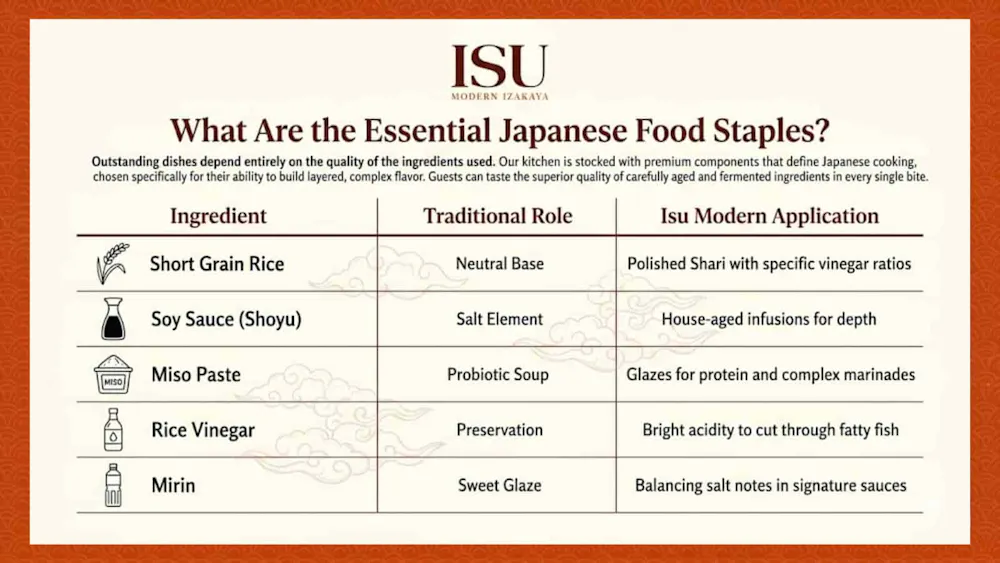
What Are the Essential Japanese Food Staples?
Outstanding dishes depend entirely on the quality of the ingredients used. Our kitchen is stocked with premium components that define Japanese cooking, chosen specifically for their ability to build layered, complex flavor. Guests can taste the superior quality of carefully aged and fermented ingredients in every single bite.
What Defines the Izakaya Experience?
Think of these venues as laid-back gastropubs where small plates serve as a catalyst for connection. Guests gather to share bite-sized dishes, creating a lively atmosphere ideal for unwinding after a long day. Our space captures that welcoming energy, allowing visitors to sample a wide variety of dishes in a single visit.
The menu features a balanced rotation of hot and cold selections, each designed to complement your drink of choice. Our staff works with genuine expertise, ensuring your comfort is prioritized without the stiff formality of traditional fine dining, constantly refining our:
Culinary Craft: Every dish is built on precise knife skills and careful heat control.
Sourcing Standards: We use premium seafood and locally grown produce to maintain honest flavors and textures.
Social Setting: Designed for sharing plates, open conversation, and a relaxed dining pace.
Which Fusion Styles Drive Our Innovation?
Creativity fuels our kitchen, as we find joy in pairing traditional techniques with international inspiration to surprise the palate. Fusion cooking allows us to explore new territory, incorporating global ingredients to enhance classic frameworks rather than overshadow them.
Signature Flavor Elements
Spicy Mayo: A creamy sauce that adds a measured heat to classic rolls.
Truffle Oil: Used sparingly to enhance the earthy aromas of premium seafood.
Fruit and Chili: A contrast of tropical sweetness and sharp heat that brightens appetizers.
Tempura Flakes: Added for textural variety, offering a satisfying crunch against tender proteins.
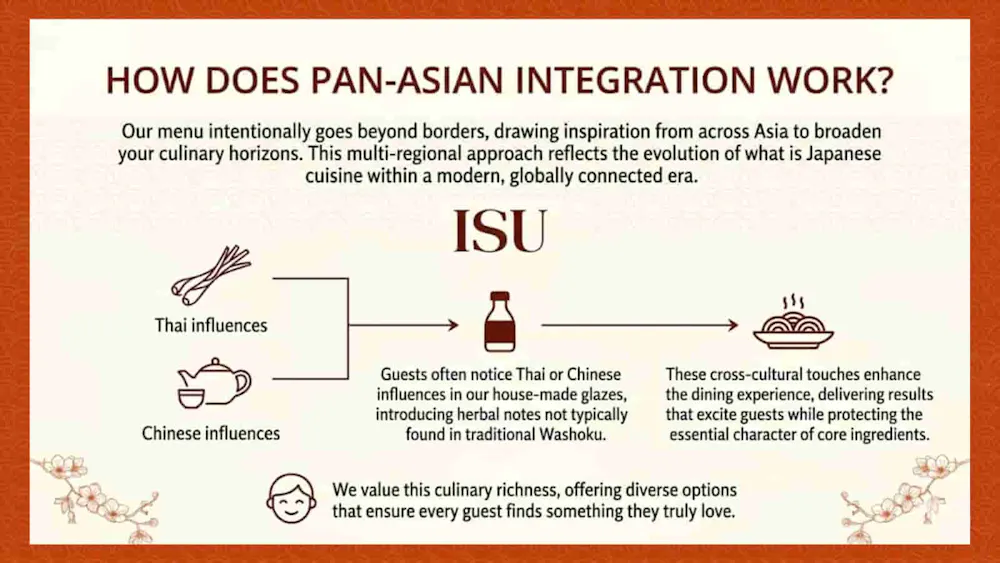
How Does Pan-Asian Integration Work?
Our menu intentionally goes beyond borders, drawing inspiration from across Asia to broaden your culinary horizons. This multi-regional approach reflects the evolution of what is Japanese cuisine within a modern, globally connected era.
Guests often notice Thai or Chinese influences in our house-made glazes, introducing herbal notes not typically found in traditional Washoku. These cross-cultural touches enhance the dining experience, delivering results that excite guests while protecting the essential character of core ingredients. We value this culinary richness, offering diverse options that ensure every guest finds something they truly love.
What Sushi Varieties Are Mastered at Isu?
Sushi remains at the heart of our menu, and we take great pride in the quality of our seafood. Every piece of nigiri or roll reflects meticulous craftsmanship, from sourcing to rice seasoning.
Nigiri: Hand-pressed mounds of seasoned rice topped with premium, typically raw, seafood. Sashimi: Thinly sliced, high-quality raw fish served without rice to highlight its pure flavor. Maki: Traditional rolls with various fillings wrapped tightly in toasted nori. Temaki: Hand-rolled cones of nori meant to be eaten quickly to preserve their crunch. Original Creations: Signature inventions featuring unique toppings and house-made sauces.
Pro Tip: The "Umami" Secret
Many guests confuse saltiness with true depth of flavor. In a skilled kitchen, we focus on the Maillard reaction and natural fermentation to build genuine umami. Avoid dipping the rice side directly into soy sauce — soaking the rice disrupts the delicate balance of the bite. Dip only the fish to enhance, rather than overpower, its natural flavor.
Experience the Best of Japanese Cuisine
An exceptional meal bridges the gap between ancient tradition and modern innovation. At ISU Restaurants, we invite you to explore a menu where craftsmanship is evident in every bite.
Stop by soon to experience our take on what is Japanese cuisine for the St. Pete community, and enjoy a blend of heritage and bold flavor. Check our online listings to plan your visit or walk into our downtown location for walk-in seating. Call 727-866-4633 to reserve a table for your next special occasion.
Frequently Asked Questions
Q: What defines an izakaya?
A: These are casual establishments that serve drinks alongside small, shareable dishes. They focus on a relaxed, social atmosphere where food encourages unhurried enjoyment with friends.
Q: How does fusion affect the taste of traditional dishes?
A: Fusion cooking introduces global ingredients — such as truffles or chili peppers — into classic Japanese preparations. This creates more complex flavors that offer new experiences while respecting traditional roots.
Q: Is sushi always served raw?
A: Not necessarily. Though raw fish is common, the term actually refers to the seasoned rice. Many varieties feature cooked seafood, fried ingredients, or vegetables for those who prefer to avoid raw fish.
Q: Why is seasonal food so important in Japanese culture?
A: Seasonal ingredients, known as Shun, peak in flavor and nutritional value at specific times of year. Using what is in season reduces the need for preservatives and ensures guests enjoy the highest possible freshness.
Q: What exactly is Pan-Asian food?
A: This style combines profiles, elements, and skills from diverse eastern countries into one unified offering. Among the cuisines it draws inspiration from include Chinese, Thai, Japanese, and Vietnamese. sushi