
What Is Black Cod Fish? The Ultimate Guide to the Ocean’s Most Luxurious Delicacy

If you have ever spotted black cod on a restaurant menu and wondered what makes it so special, the answer is simple: black cod is a rich, buttery fish known for its silky texture, high omega-3 content, and deep flavor. Despite its name, it is not actually related to traditional cod. Also called sablefish, black cod is considered one of the most prized fish in Japanese and Nikkei cuisine because of its unique balance of richness and tenderness.
At ISU in St. Petersburg, Florida, black cod remains one of the standout menu items because it offers a dining experience that feels both comforting and refined. Whether you are new to seafood or already enjoy premium fish dishes, understanding what is black cod fish can help you appreciate why it continues to be a favorite among chefs and diners worldwide.
Key Takeaways
Taxonomic Distinction: Black cod, also known as sablefish, belongs to the Anoplopomatidae family and is completely unrelated to Atlantic or Pacific true cod species.
Gastronomic Profile: It is globally prized for its ultra-buttery texture, cascading large flakes, and naturally high oil content that resists drying out during high-heat cooking.
Nutritional Density: The flesh contains highly concentrated levels of beneficial EPA and DHA omega-3 fatty acids along with premium, easily digestible proteins.
Cultural Heritage: Japanese culinary masters have long valued black cod as a premium seafood choice, utilizing traditional preservation methods like long-term miso curing.
The Nikkei Influence: At ISU in St. Petersburg, Florida, black cod is prepared with Nikkei-inspired flavors that highlight the fish’s natural richness through sharp Peruvian and Japanese elements.
What Is Black Cod Fish?
Black cod is a deep-water marine species known scientifically as Anoplopoma fimbria, prized for its velvety, oil-rich white flesh. While traditional Atlantic cod features lean, muscle-bound meat that easily dries out, black cod relies on a vast reserve of natural lipids woven directly into its muscle tissue to survive the freezing, high-pressure environments of the deep Pacific.
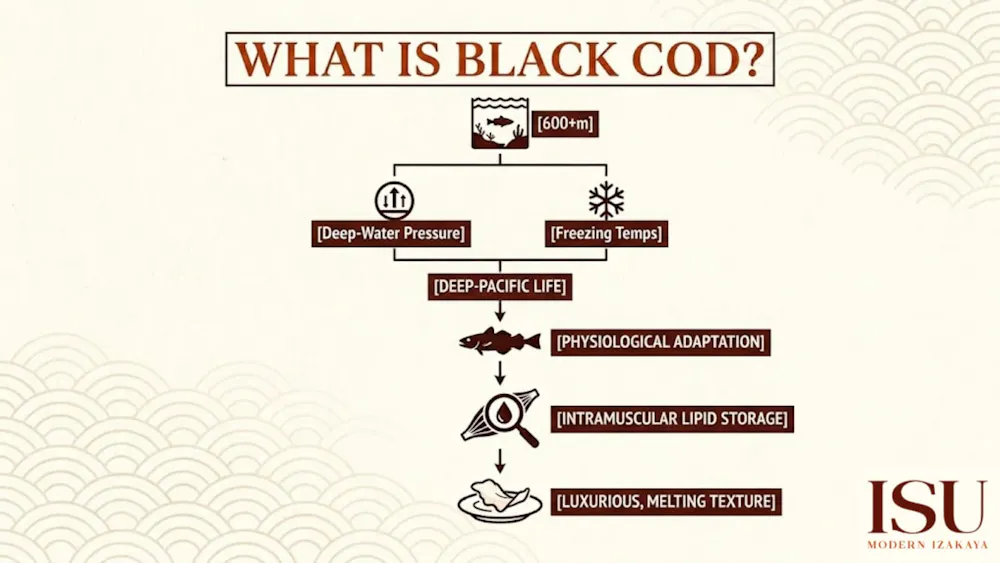
The reality on the ground is that calling this species a "cod" is purely a historical marketing misnomer. These fish dwell at depths exceeding 600 meters from the icy slopes of the Bering Sea down through the Pacific Northwest. This extreme habitat forces the fish to store massive amounts of long-chain fatty acids, yielding a luxurious mouthfeel that easily outclasses standard commercial whitefish.
Why Is Black Cod So Popular?
Black cod has gained international recognition because it offers something many fish cannot: richness without heaviness. The pristine white flesh breaks into large, succulent shards that retain an immense amount of moisture, allowing the fillet to withstand intense broiling and searing without losing its structural integrity.
The Culinary Framework: Four Pillars of Culinary Appeal
Exceptional Texture: Chefs frequently describe the cooked flesh as biological butter. The muscle fibers slide apart with minimal fork pressure, providing an immediate melt-in-your-mouth sensation that converts even skeptical non-seafood diners.
Rich Flavor: Unlike the neutral, flat profile of standard cod, sablefish delivers a deep, resonant savoriness. Its natural oils act as a flavor conductor, anchoring bold seasonings without getting lost behind them.
Versatile Preparation: The robust fat content provides a massive safety buffer for cooks. It can be hot-smoked, flash-broiled, roasted, or pan-seared while retaining its signature suppleness.
Nutritional Benefits: The species offers an exceptionally dense macro and micronutrient profile that balances culinary indulgence with clean health metrics.
Contextual Nutritional Clusters
🧠 Neurological & Cardiovascular Assets: High-density EPA and DHA omega-3 fatty acids that actively support arterial flexibility and brain health.
💪 Muscle Synthesis: Clean, high-quality proteins delivering approximately 17 grams of pure amino acids per 100-gram serving.
⚡ Metabolic Regulation: Substantial traces of potassium, iron, and bioavailable calcium required for cellular fluid balance and bone density.
How Did Black Cod Achieve Global Acclaim?
The history behind black cod tracks a dramatic shift from an ignored regional catch to an elite global delicacy. For over a century, North American commercial fleets largely ignored the deep-dwelling species due to its soft skin and high oil profile, which didn't fit the mid-century preference for lean, firm white fish.
Here is the part most seafood historians won't tell you: the entire industry pivoted during the late 1970s and 1980s when Japanese deep-sea cargo vessels recognized the immense quality of the Pacific Northwest catches. Japan already possessed a deep cultural appreciation for fatty fish like bluefin belly, and they quickly cornered the market for this "black gold."
This sudden, aggressive surge in international demand threatened to deplete coastal populations. In response, federal authorities in Alaska and Canada pioneered strict individual fishing quotas (IFQs) and longline tracking systems. Today, these fisheries are heavily regulated, ensuring that every harvest satisfies strict sustainability metrics before ever reaching a kitchen.
What Does Black Cod Taste Like?
Black cod features a rich, buttery flavor that is more delicate than wild salmon but significantly more luxurious than traditional white fish. The flavor balance leaves a clean, velvety coating on the palate that carries notes of natural sweetness and deep umami.
Comparing Pacific Whitefish Profiles
Seafood Metric | Black Cod (Sablefish) | Atlantic Cod | Wild King Salmon |
Fat Content | Extremely High (Intramuscular) | Very Lean | High (Omega-3 Rich) |
Flake Texture | Large, silky, delicate scrolls | Small, firm, dense blocks | Medium, structural sheets |
Dominant Flavor | Sweet cream, clean umami | Mild, neutral, watery | Robust, forward, oily |
Overcook Margin | Forgiving (Retains moisture) | Low (Becomes rubbery) | Moderate (Dries quickly) |
How Is Black Cod Prepared at ISU in St. Petersburg, Florida?
At ISU, black cod represents the restaurant’s commitment to combining Japanese precision with Peruvian-inspired flavors. Located in the heart of St. Petersburg, ISU focuses on carefully sourced ingredients and thoughtful preparation to bring authentic Nikkei culture to the Gulf Coast.
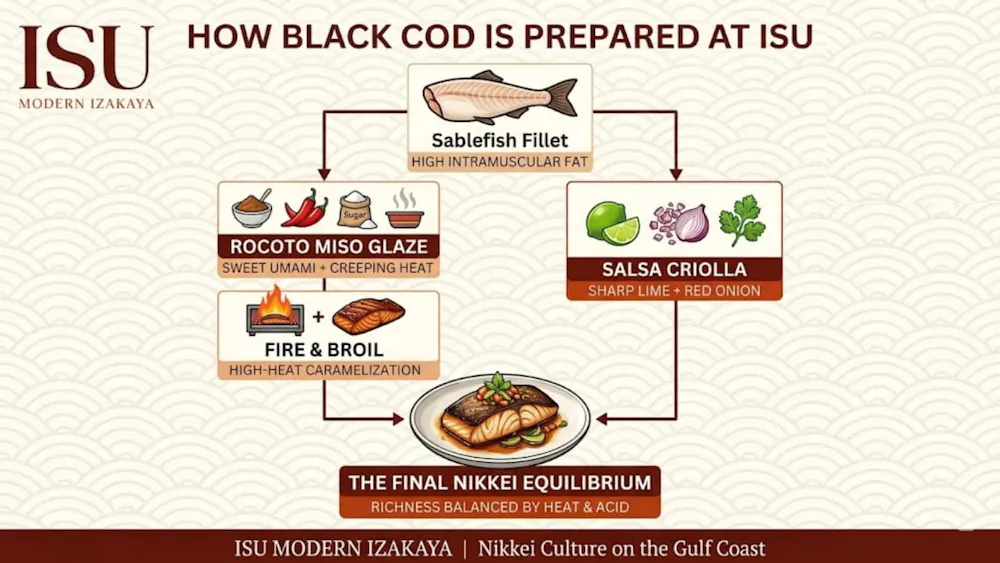
Our signature execution strips away the boring, predictable approaches seen at standard seafood houses:
🍽️ BLACK COD — $46
Rocoto miso, salsa criolla
The kitchen fires the fish under a high-temperature broiler to caramelize the sugar in the rocoto-infused miso paste, producing a blistered, deeply savory crust. This intense heat liquifies the interior fats, transforming the fillet into soft, decadent layers. The accompanying salsa criolla cuts through the intense fat with sharp lime juice, crisp red onion, and fresh cilantro.
Guests regularly round out their dining experience by pairing our signature fish with these complementary Nikkei plates:
Wagyu Gyozas ($19): Pan-seared dumplings packed with rich beef, sweet plantain, corn silk, and concentrated jus.
Crispy Rock Shrimp ($18): Flash-fried local shrimp tossed in a vibrant, herbaceous aji verde crema.
Karaage Chicken ($17): Ultra-crispy thigh meat served with a bright lemon ginger zu and a stinging szechuan peppercorn creme.
Wagyu Ribeye ($90): A massive 14oz cut marinated in aji panca-koji, balanced with an acidic pickled chili escabeche.
Is Black Cod Actually Healthy?
Yes, black cod is an exceptionally nutritious option for individuals seeking high-density healthy fats and clean protein sources. The primary health value rests in its unique ratio of monounsaturated and polyunsaturated fats, which keep the body satiated far longer than lean proteins.
Critical Biological Markers
Anoplopoma Lipids: Specialized long-chain monounsaturated fatty acids that assist in reducing low-density lipoprotein (LDL) cholesterol in human blood panels.
Essential Trace Elements: High concentrations of selenium and iodine, which act as core catalysts for healthy human thyroid function and metabolic regulation.
Peptide Chains: Complete amino acid profiles that fuel efficient cellular repair and muscle recovery without introducing heavy trans-fats.
Why Black Cod Works So Well in Nikkei Cuisine?
Nikkei cuisine thrives on the deliberate tension between heavy, unctuous proteins and sharp, fiery, acid-driven flavor elements. Because what is black cod fish boils down to an incredibly rich, oily asset, it serves as the ultimate blank canvas for the bold ingredients native to Peru and Japan.
🌶️ Aji & Rocoto Heat: The creeping capsule-heat of Peruvian peppers slices cleanly through the dense layer of fish oil, stimulating the tongue without numbing it.
🍋 Citrus Brightness: Fresh yuzu, key lime, and chicha de jora introduce structural acids that chemically break down the heavy mouthfeel on impact.
🍶 Fermented Depth: Traditional Japanese white miso and aged soy sauce undergo Maillard browning on the fish skin, developing a complex smoky crust that locks in internal moisture.
Homeowner-Focused Insight: Sourcing and Selection Tips
When you are buying fresh fish to cook at home, always check the skin side of the fillet. High-quality black cod should feature a dark, charcoal-gray skin that is completely free of tears or gray slime, and the raw flesh should look translucent and pearlescent, never flat chalk-white. If the flesh looks dry or split before it even hits the pan, it has likely been frozen improperly, which destroys those beautiful, delicate flakes.
Master Your Seafood Journey Today
Understanding what is black cod fish changes how you view a premium menu. Its incredible texture, natural oil profile, and adaptability make it a benchmark dish for world-class kitchens. For seafood lovers across the Tampa Bay area, ISU provides an unmatched introduction to this deep-sea treasure, utilizing authentic techniques to balance its natural luxury with bright South American heat.
Are you ready to see what makes this fish the absolute pinnacle of Nikkei dining? Bring your friends, reserve a table, and join us in the dining room tonight. Explore our menu or visit us in St. Petersburg today. Contact (727) 866-4633 to book your table at ISU and discover why ISU is top!
Frequently Asked Questions
Q: Is black cod actually a member of the cod family?
A: No. Black cod is entirely unrelated to true cod species like Atlantic or Pacific cod. It is a member of the Anoplopomatidae family, uniquely categorized as sablefish due to its dark, velvety skin.
Q: Why does black cod command such a premium price at restaurants?
A: The higher cost stems from limited global supply, strict government fishing quotas, and the extreme depths required for harvesting. Additionally, its high oil content makes it incredibly desirable in premium international seafood markets.
Q: Does black cod carry a heavy, fishy odor or taste?
A: No. While it has a very high oil profile, the flavor is remarkably clean, mild, and sweet. It lacks the strong, intensely fishy notes often associated with other oily species like mackerel or sardines.
Q: Where are commercial black cod populations primarily harvested?
A: The vast majority of high-grade black cod is wild-caught using deep-water longlines in the icy, pristine waters of the North Pacific Ocean, specifically along the coastlines of Alaska, British Columbia, and the Pacific Northwest.
Q: What are the preferred cooking methods for preparing black cod at home?
A: Due to its robust intramuscular fat, black cod excel under intense heat. It is best prepared through pan-searing, high-heat broiling, smoking, or long-term marinating in traditional Japanese sweet miso pastes.