
Is Raw Fish Safe to Eat? What You Should Know Before Ordering Sushi in St. Petersburg

Raw seafood has established itself as the pinnacle of modern coastal dining across Florida, drawing discerning sushi enthusiasts who demand clean flavor profiles and uncompromised marine proteins. Yet, a foundational question continues to surface among guests: is raw fish safe to eat? The definitive answer is yes, provided the product is meticulously sourced, thermally managed, and executed by highly disciplined culinary craftsmen. Establishments like ISU in St. Petersburg operate under rigorous back-of-house parameters to ensure that every raw preparation honors both the palate and strict health protocols.
Whether your table regularly requests premium sashimi or you occasionally indulge in curated nigiri, understanding the underlying operational mechanics of seafood safety allows you to navigate luxury menus with complete confidence.
Key Takeaways
Sourcing Over Silos: Rely on strictly monitored cold chains and verified vendors to mitigate initial biological liabilities before the product ever reaches the kitchen.
The Cryogenic Standard: Implement precise blast-freezing protocols to destroy deep-tissue parasites while preserving the delicate cellular structure of the fish.
Vulnerable Demographics: Advise expectant mothers, geriatric diners, and immunocompromised guests to opt exclusively for the cooked menu selections.
Sensory Diagnostics: Evaluate ocean proteins by muscle elasticity and neutral olfactory markers rather than relying solely on surface coloration.
St. Petersburg Culinary Excellence: Experience a curated raw menu at ISU, where high-integrity sourcing meets sophisticated, technical execution.
The Appeal of the Uncooked Marine Profile
Cold-water proteins served in their raw state offer an unadulterated clarity of flavor and a silky, delicate muscle texture that heat inherently alters. Preparations such as classic sashimi, crudo, poke, and traditional ceviche are designed to elevate the natural character of the catch, allowing the intrinsic clean notes of the seafood to step forward without the masking effects of heavy cooking techniques.
From a nutritional standpoint, raw preparations preserve fragile micronutrients, offering dense percentages of lean protein, heart-healthy omega-3 fatty acids, and essential minerals in their most bioavailable forms. Connoisseurs recognize that unheated seafood retains a pristine moisture profile and a refined mouthfeel unmatched by traditional thermal preparation.
At ISU, our culinary team showcases these elements through highly focused plates. Consider our Bluefin Tuna accented with sharp aji amarillo and toasted ra-yu, or our King Salmon dressed with complex pancayaki and bright chimichurri. For the ultimate expression of marbling, our Otoro is paired with a precise negidare and delicate soy pearls, each dish demonstrating how rigorous preparation unlocks pure ingredient integrity.
Restaurant Protocols and Pathogen Mitigation
Consuming raw marine proteins within a professional setting is safe, assuming the kitchen operates under strict compliance with comprehensive FDA pathogen-reduction protocols and sub-zero freezing mandates. When dining out, your physical well-being depends entirely on the operational discipline of the kitchen staff and the verified integrity of their cold chain logistics.
Elite kitchens systematically neutralize biological hazards by maintaining these operational baselines:
Audit the Chain of Custody: Secure inventory exclusively through licensed maritime purveyors who provide continuous temperature documentation from vessel to loading dock.
Log Every Thermal Shift: Maintain dedicated refrigeration units calibrated strictly below the bacterial proliferation danger zone, checking variances multiple times per shift.
Enforce Cryogenic Destruction: Subject wild pelagic species to rapid commercial blast-freezing schedules designed to eradicate hidden parasites without rupturing cellular walls.
Maintain Absolute Separation: Deploy dedicated, color-coded cutting surfaces and high-carbon steel blades reserved exclusively for raw preparation to eliminate cross-contamination.
Require Advanced Certification: Ensure every culinarian on the line holds specialized credentials in safe seafood handling and micro-contamination defense.
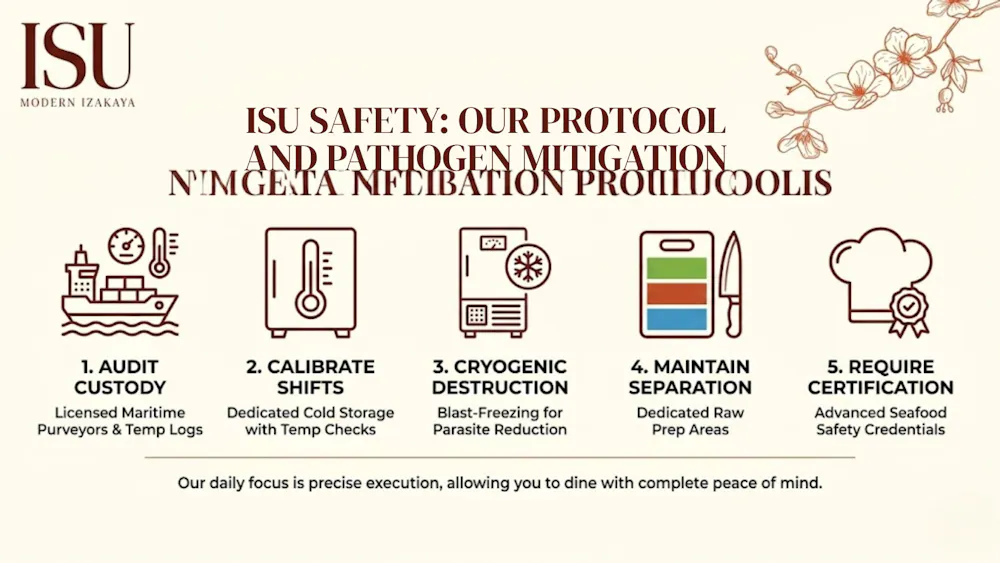
This systemic discipline is precisely why discerning diners seek out vetted culinary establishments. At ISU, our daily focus centers on strict sourcing verification and precise execution, allowing our St. Petersburg guests to dine with absolute peace of mind.
The Science of Cryogenic Parasite Destruction
In a high-end sushi kitchen, professional blast-freezing is the primary defense mechanism against biological hazards, neutralizing hidden parasites while maintaining the pristine structural integrity of the muscle tissue. The commercial concept of "freshness" is frequently misunderstood by the public; a master craftsman understands that rapid, sub-zero flash-freezing is what truly ensures safety before a single slice lands on your plate.
Per federal safety frameworks, wild fish destined for raw consumption must undergo deep-freezing at ultra-low temperatures to eliminate microscopic liabilities. When handled properly via commercial blast freezers, this process locks in moisture and prevents ice crystallization, preserving the premium texture of the flesh. While certain farm-raised pelagic varieties or specific deep-water tunas may be legally exempt from freezing mandates due to an naturally low parasitic baseline, premier establishments consistently follow the most conservative industry safety protocols.
When pondering whether is raw fish safe to eat, remember that professional cryogenic management is the exact reason why elite sushi bars can safely present raw delicacies day after day.
Understanding Clinical Risks and Microbial Threats
The clinical risks associated with raw seafood consumption stem primarily from exposure to virulent bacterial strains like Salmonella or Vibrio, alongside wild parasitic nematodes. While flawless back-of-house execution dramatically reduces these exposures, introducing completely unheated animal proteins into the digestive tract always maintains a baseline biological risk.
Bacterial Pathogens
Salmonella Enterica: This bacterium triggers acute gastrointestinal distress, presenting as fever, abdominal cramping, and systematic vomiting, with symptoms manifesting 12 to 72 hours post-ingestion.
Vibrio Vulnificus: Frequently found in warm, coastal estuarine environments, this pathogen can induce intense nausea, severe abdominal pain, and systemic chills.
Parasitic Realities
Anisakid Nematodes: Certain wild marine species can harbor microscopic parasites that, if not neutralized via rigid blast-freezing protocols, cause acute gastric irritation and severe allergic responses upon ingestion.
These biological realisms underscore why choosing a specialized restaurant is a necessity. Established venues that focus entirely on premium raw seafood operate with the specialized infrastructure required to minimize these clinical concerns.
Demographics Requiring Thermal Protection
Guests with compromised immune profiles, pregnant women, young children, and older adults should strictly avoid raw seafood options due to an elevated vulnerability to foodborne pathogens. For these specific patient profiles, even minor exposure to environmental bacteria can lead to severe systemic complications.
Expectant Mothers: Face heightened clinical risks from opportunistic pathogens capable of breaching the protective placental barrier.
Pediatric and Geriatric Guests: Present either developing or naturally declining immune systems that lack the cellular response required to combat aggressive marine bacteria.
Immunocompromised Individuals: Patients navigating active oncology therapies or managing complex autoimmune conditions lack the white blood cell defenses to neutralize marine pathogens.
Hepatic Patients: Individuals with compromised liver function or chronic hepatic disease are uniquely susceptible to fatal Vibrio septicemia.
For these groups, expertly executed cooked seafood represents the correct, risk-free alternative. If you are uncertain whether raw marine proteins align with your current health status, consulting a qualified medical professional remains the standard protocol.
Mercury Management and Bioaccumulation
Chemical risks like heavy metal exposure are managed by selecting smaller species or younger fish that sit lower on the marine trophic pyramid, preventing dangerous levels of bioaccumulation. The question of whether is raw fish safe to eat requires looking past immediate bacteria to assess long-term chemical profiles.
Apex Predators (Elevated Mercury): Species such as Swordfish, Marlin, Shark, and large Bigeye Tuna accumulate significant concentrations of methylmercury over their extended lifespans and should be ordered infrequently.
Short-Lifespan Pelagics (Minimal Mercury): Salmon, Cod, wild-caught local whitefish, Sardines, and Anchovies present nominal heavy metal risks, making them excellent choices for consistent dietary inclusion.
Kitchens that prioritize culinary transparency curate their menus to balance variety with environmental safety. At ISU, guests can safely enjoy a diverse spread featuring pristine Yellowtail with lychee zu, Kampachi with a bright salsa verde and crispy quinoa, and rich Salmon Belly kissed with truffle oil and fresh lime zest.
Engineering the Safe Kitchen Environment
Elite sushi bars maintain zero-tolerance safety standards by implementing absolute physical separation between raw and cooked preparation lines, tracking digital temperature logs every hour, and enforcing strict vendor compliance. Flawless kitchen execution is never a matter of luck; it is a product of rigorous operational engineering.
Back-of-House Engineering Protocols
Calibrated Thermal Control: Kitchen teams monitor walk-in freezers and line drawers hourly, ensuring raw inventory remains at temperatures that halt microbial replication.
Cross-Contamination Mitigation: Chefs utilize completely separate, color-coded preparation boards and sanitized carbon steel knives reserved exclusively for raw fish fabrication.
Traceable Vendor Credentials: Restaurants partner solely with commercial maritime purveyors who furnish documented evidence of sustainable harvest methods and continuous cold-chain logging.
Advanced Apprenticeship Standards: Professional sushi culinarians spend years studying muscle anatomy, rapid sanitation mechanics, and precise knife work to minimize protein degradation.
When evaluating a new dining room, visual tidiness is a strong indicator of kitchen discipline. A pristine dining space and an organized, calm line tell you everything you need to know about a restaurant's food safety culture.
Nutritional Architecture of Raw Seafood
From an epidemiological perspective, premium sushi represents an exceptional nutritional choice, providing clean sources of lean muscle-building amino acids, fat-soluble vitamins, and essential omega-3 fatty acids. It stands as one of the least processed, most nutrient-dense options available in modern dining when selected mindfully.
Essential Fatty Acid Profiles: Provides concentrated doses of EPA and DHA omega-3 fatty acids, which optimize neurological function and support cardiovascular health.
Bioavailable Micronutrients: Delivers clean metabolic support via dense quantities of essential Selenium, Vitamin D, and Vitamin B12.
Caloric Additives: Westernized specialty rolls often introduce unneeded sugars, sodium-heavy reductions, commercial mayo emulsifications, and caloric fried elements that alter the nutritional profile.
Selecting clean sashimi or traditional nigiri allows the diner to experience a nutrient-dense, clean meal focused purely on ingredient quality. At ISU, our menu is specifically designed to highlight natural flavors, avoiding heavy, masking sauces in favor of balanced culinary precision.
Navigating Local Sourcing Realities
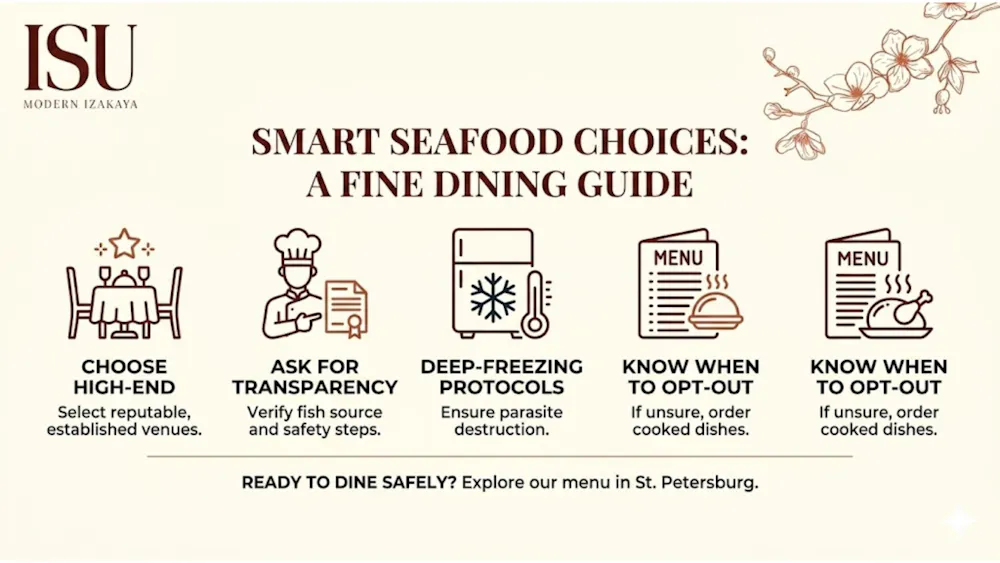
The reality of dining within the St. Petersburg coastal corridor is that seafood quality varies dramatically between casual beachside tourist venues and dedicated raw bars. True safety cannot be measured by a waterfront view; it is verified exclusively by the kitchen’s fidelity to local health codes and deep-freezing schedules. If a service team cannot clarify the precise provenance of their wild salmon or detail their parasite destruction protocol, bypass the raw selections entirely and order from the hot kitchen menu.
Mastering Your Fine Dining Decisions
Navigating a premium seafood menu safely requires an understanding that the question of whether is raw fish safe to eat ultimately depends on kitchen transparency, back-of-house sanitation rigor, and verified deep-freezing protocols. By anchoring your reservations in established, high-end culinary venues that enforce transparent supply chains, you can confidently explore luxury raw delicacies without placing your health at risk.
If you are ready to experience the absolute pinnacle of professionally handled, masterfully prepared raw seafood in the Tampa Bay region, Explore our menu or visit us in St. Petersburg today. Contact (727) 866-4633 to book your table at ISU and discover why ISU is top!
Frequently Asked Questions
Q: Can raw fish make you sick?
A: Yes, consuming improperly stored, un-vetted, or non-frozen raw fish can expose your digestive tract to pathogenic bacteria and active marine parasites. Aligning yourself with reputable establishments that enforce strict safety controls reduces your clinical risk to near zero.
Q: What does sushi-grade fish mean?
A: "Sushi-grade" is an industry marketing term indicating that the seafood has undergone commercial flash-freezing protocols required for raw service. There is no formal regulatory definition managed by the FDA or USDA, meaning the designation relies completely on vendor and restaurant integrity.
Q: Is frozen fish safer for sushi?
A: Yes, commercial blast-freezing at ultra-low, sub-zero temperatures for mandated periods is the only definitive method to eradicate parasites in wild catches. True flash-freezing preserves the natural moisture and delicate muscle texture while guaranteeing a completely clean, safe product.
Q: How can you tell if raw fish is fresh?
A: You can evaluate raw fish by its firm, elastic muscle tissue, semi-translucent color clarity, and mild, clean briny aroma. Avoid any seafood presentation that displays a tacky surface film, browning edges, or a sharp, ammonia-forward scent.
Q: Which raw fish is considered safest to eat?
A: Commercially flash-frozen tuna varieties and farm-raised salmon raised under strict aquaculture biosecurity standards are widely recognized as the safest raw options. These specific species carry an exceptionally low baseline risk for natural parasite transmission.